Water is the literal lifeblood of global manufacturing. Whether it is running through massive cooling towers, generating high-pressure steam in boilers, or serving as a direct processing ingredient, raw water keeps industrial facilities operational.
However, natural water is packed with hidden saboteurs: dissolved minerals, corrosive gases, suspended solids, and biological microorganisms. Left untreated, these invisible contaminants cause catastrophic equipment failure, massive energy losses, and costly production downtime.
This comprehensive guide explores the essential Water Treatment Chemicals used across industrial sectors and why they are vital to modern manufacturing.
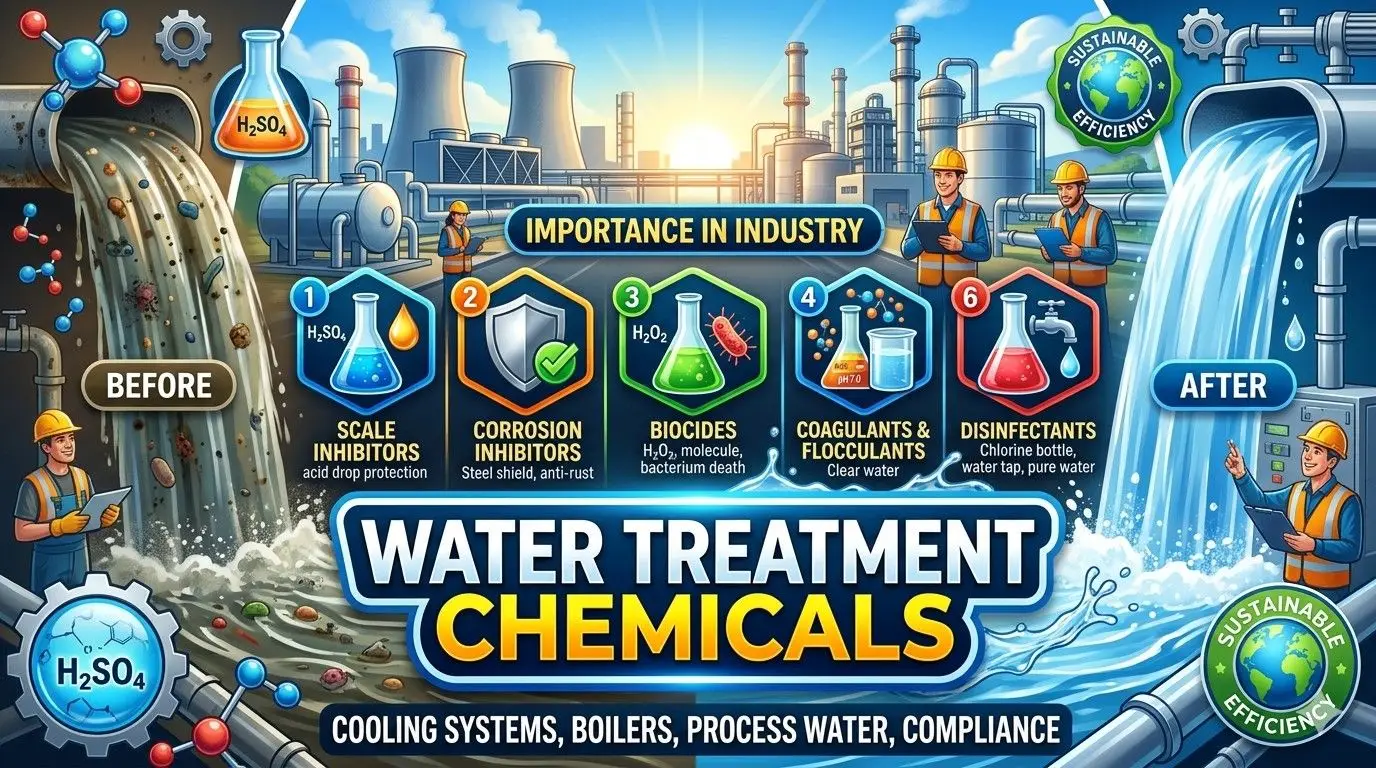
1. Scale Inhibitors (Antiscalants)
When hard water is heated or evaporated in industrial processes, dissolved minerals like calcium and magnesium precipitate out of the solution. They form a dense, rock-hard crystalline crust known as scale along the internal walls of piping and heat exchangers.
- How They Work: Scale inhibitors disrupt the crystallization process. They bind to mineral ions, preventing them from grouping together and adhering to metal surfaces.
- Why They Matter: Scale acts as an unwanted insulator. Even a microscopic layer of scale inside a boiler or heat exchanger severely degrades thermal efficiency, forcing the system to burn significantly more fuel or electricity to achieve the same temperature.
2. Corrosion Inhibitors
Water is naturally corrosive to industrial metals, particularly carbon steel and copper. Dissolved oxygen, acidic pH levels, and high electrochemical activity continuously eat away at expensive equipment infrastructure.
- How They Work: These specialized chemical compounds form a protective, micro-thin molecular barrier directly over the exposed metal surfaces, shielding them from direct contact with oxygen and corrosive ions.
- Why They Matter: Unchecked corrosion causes localized metal thinning and dangerous “pitting,” leading to sudden pipe bursts, structural leaks, and premature equipment replacement.
3. Biocides and Algaecides
Industrial water systems—especially open-recirculating cooling towers—provide the perfect warm, oxygen-rich environment for biological life to thrive. Bacteria, algae, and fungi can quickly take over a system.
- How They Work: Industrial operators utilize two types of biocides:
- Oxidizing Biocides: Powerful agents like Chlorine or Hydrogen Peroxide that rapidly destroy microbial cell walls on contact.
- Non-Oxidizing Biocides: Specialized organic compounds that interfere with the metabolic or reproductive lifecycles of microorganisms.
- Why They Matter: Beyond forming thick, insulating biological slime layers, certain bacteria (like Sulfate-Reducing Bacteria) excrete highly localized acids that rapidly corrode steel. Furthermore, poorly maintained cooling towers can harbor Legionella bacteria, posing a severe public health hazard.
4. Coagulants and Flocculants
Raw surface water from rivers or canals contains high amounts of suspended silt, clay, and organic matter. Because these particles are microscopic and carry negative electrical charges, they repel each other and remain permanently suspended, making the water muddy or turbid.
- How They Work:
- Coagulants (like Aluminum Sulfate or Ferric Chloride) carry high positive charges. They neutralize the negative charges of the suspended solids, allowing them to clump into tiny particles.
- Flocculants (long-chain polymers) act like a web, gathering those tiny clumps into large, heavy masses called “flocs” that rapidly settle out of the water.
- Why They Matter: This chemical duo is the fundamental first step in municipal and industrial water clarification, ensuring raw water is clean enough to enter filtration units or downstream manufacturing lines.
5. pH Adjusters and Neutralizers
Industrial wastewater discharges and internal process loops must maintain a highly strict, balanced pH range to protect equipment and comply with environmental laws.
Why They Matter: Extreme pH levels instantly strip away protective metal coatings, accelerate corrosion rates, and kill the beneficial microbes used in biological wastewater treatment plants.
How They Work: Strong alkaline agents like Sodium Hydroxide (Caustic Soda) are introduced to neutralize highly acidic streams. Conversely, strong mineral acids like Hydrochloric Acid or Sulfuric Acid are injected to safely lower dangerously high alkaline levels.